South Korea Conducts A Comprehensive Review Of The Import Of E-liquids
South Korea Conducts A Comprehensive Review Of The Import Of E-liquids
South Korea Conducts A Comprehensive Review Of The Import Of E-liquids
South Korea Conducts A Comprehensive Review Of The Import Of E-liquids
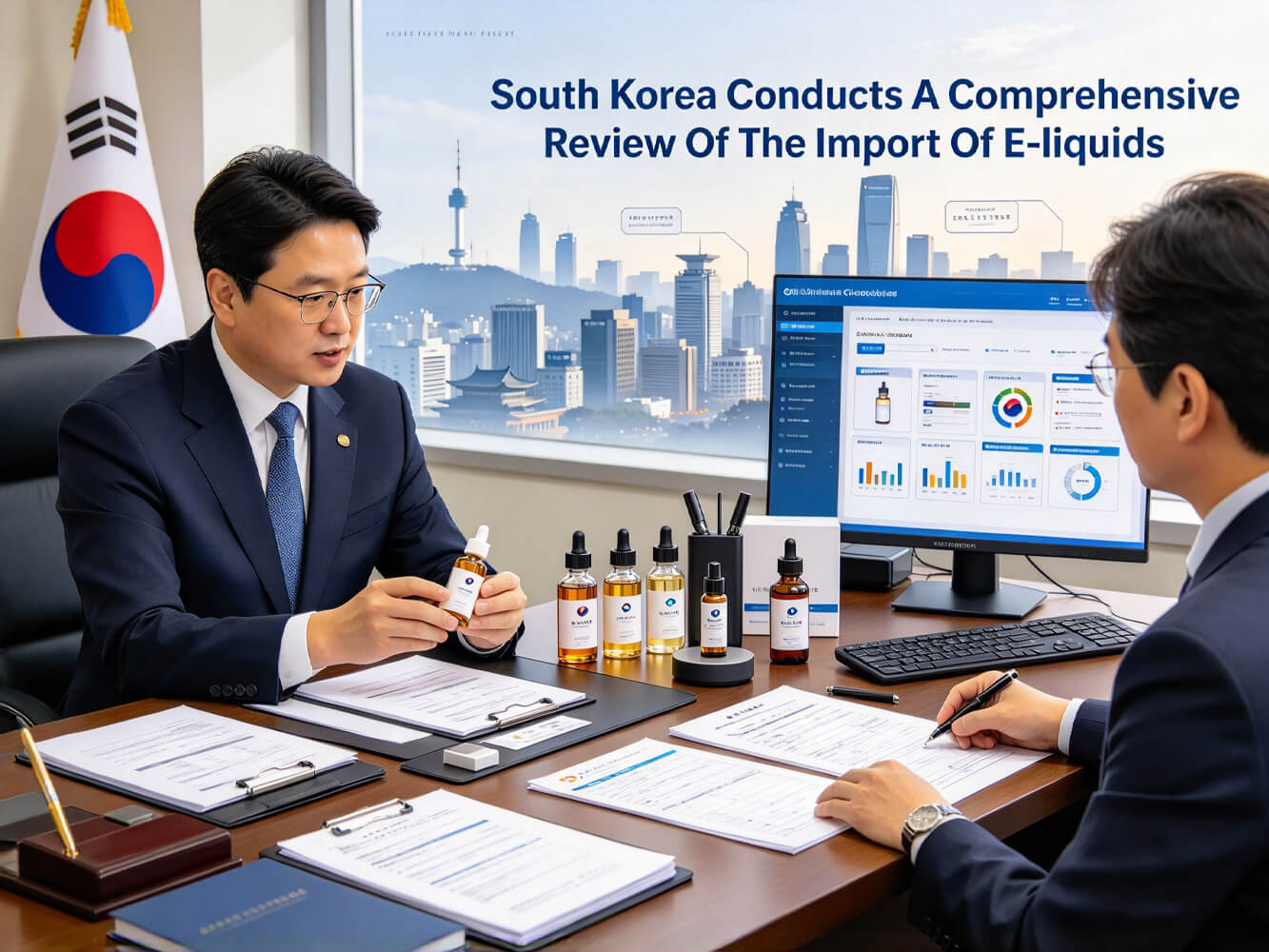
The South Korean Customs Service further tightens the import management of nicotine like and nicotine free e-liquids, implements 100% document review of related products, and conducts pre clearance component analysis on all e-liquid import declarations. As of September 20, 2026, South Korea imported approximately 15 tons of nicotine e-liquid, of which 99.99% came from China; There are approximately 316 tons of nicotine free liquid, of which about 315 tons, accounting for 99.7%, come from China. After South Korea included synthetic nicotine in its tobacco regulatory system in April this year, customs have gradually increased their scrutiny of alternative nicotine categories and “nicotine free” declarations, and required importers to submit supply chain documents including Chinese production licenses, export declarations, and trading relationships.
Core Overview
The South Korean Customs and Excise Department has implemented a 100% document review on nicotine like and nicotine free e-liquids.
Starting from July 16th, all e-liquid import declarations will undergo component analysis before customs clearance.
As of September 20th, South Korea imported about 15 tons of nicotine e-liquid, of which 99.99% came from China.
During the same period, approximately 316 tons of nicotine free e-liquid were imported, of which about 315 tons, accounting for 99.7%, came from China.
Starting from August 18th, importers are required to submit five types of documents, including MSDS, overseas transaction relationship diagram, export declaration documents, and production license.
Compared to May to August, the import weight of nicotine like liquids decreased by 83.3% from January to April 2026; Nicotine free liquid decreased by 2.6%.
From 2025 to September 20, 2026, South Korean customs seized 22 cases of declaring nicotine containing e-liquids as nicotine free products, totaling 65.43 liters.
The South Korean Customs Department has not disclosed the specific import companies or vape brands involved in this strengthened regulation.
South Korea Conducts A Comprehensive Review Of The Import Of E-liquids (1)
Synthetic nicotine will be included in tobacco regulation from April 24th
The revised Tobacco Industry Act in South Korea will come into effect on April 24, 2026, expanding the definition of tobacco to products made from tobacco or nicotine as raw materials.
Previously, synthetic nicotine manufactured from non tobacco sources was not included in the original definition of tobacco. After the amendment takes effect, related products will begin to enter the tobacco licensing, sales, and tax regulatory system.
South Korea has also set a two-year tax transition arrangement for some tobacco products manufactured from non tobacco nicotine sources. According to relevant amendments, certain items such as individual consumption tax, tobacco consumption tax, and national health promotion burden fund will be levied at 50% of the usual level during the transition period, and the transition arrangement will continue until April 2028.
The South Korean Customs Department stated that with the inclusion of synthetic nicotine in regulation, the risk of taxable products being declared as nicotine like or nicotine free to avoid related taxes and regulations has increased.
Almost all nicotine like and nicotine free imports come from China
According to data from the South Korean Customs Department, as of September 20th, the import volume of nicotine like e-liquids in South Korea this year is about 15 tons, of which 99.99% are from China.
Approximately 316 tons of nicotine free liquid were imported during the same period, of which about 315 tons came from China, accounting for 99.7%.
This proportion only applies to the nicotine like and nicotine free liquids counted by the South Korean Customs Department this time, and does not represent the same proportion of China’s imports of all e-liquids in South Korea.
Given that two types of products are highly concentrated in China, South Korean customs have studied China’s vape production and export licensing system, and included relevant licenses, transaction relationships, and export declaration documents in import authenticity verification.
South Korea Conducts A Comprehensive Review Of The Import Of E-liquids (2)
Continuous upgrade of clearance requirements from June to August
South Korea will gradually increase the intensity of e-liquid import inspections this year.
Starting from June 15th, imported nicotine and nicotine free e-liquids must submit Material Safety Data Sheets (MSDS) to verify product composition and whether they contain nicotine.
Starting from July 16th, the Korea Central Customs Analysis Institute has started conducting component analysis on all e-liquid import declaration cases before customs clearance.
Starting from July 28th, the South Korean Customs Department and the Food and Drug Safety Service (MFDS) will further establish a unified qualitative and quantitative analysis method for nicotine like substances, and adopt a unified judgment standard within the customs system.
Starting from August 18th, nicotine like and nicotine free e-liquids will be included in the 100% document review.
The main materials that importers need to submit include:
- Material Safety Data Sheet (MSDS).
- Special contracts for electronic transactions.
- The transaction relationship diagram between overseas manufacturers, distributors, and exporters.
- Export declaration certificate from the exporting country.
- Tobacco monopoly enterprise production license.
For products from China, the above production license is one of the supply chain certification materials required by South Korean customs for importers to submit.
This requirement belongs to the South Korean import clearance audit arrangement and does not equate to the independent licensing recognition made by the South Korean regulatory authorities for all Chinese related enterprises.
The weight of nicotine like imports has decreased by 83.3%
The South Korean Customs Department also announced the changes in imports before and after regulatory adjustments.
From January to April 2026, there will be 6 batches and 12 tons of nicotine like liquids imported; From May to August, it will be reduced to 5 batches and 2 tons.
The number of batches decreased by 16.7%, and the import weight decreased by 83.3%.
Nicotine free liquids have relatively limited changes during the same period.
From January to April, there were 513 batches and 153 tons of imports; From May to August, there were 430 batches and 149 tons.
The number of batches decreased by 16.2%, and the import weight decreased by 2.6%.
There is a significant difference in the magnitude of changes between the two types of products: the import weight of nicotine like e-liquids has decreased significantly, while the import scale of nicotine free e-liquids has remained relatively stable.
South Korea Conducts A Comprehensive Review Of The Import Of E-liquids (3)
22 cases involving nicotine containing liquids declared as nicotine free
The South Korean Customs Service also released enforcement data related to false declarations.
From 2025 to September 20, 2026, the customs seized a total of 22 cases of declaring nicotine containing e-liquids as nicotine free products, with a total volume of 65.43 liters.
among which
15 cases and 61.89 liters in 2025;
As of September 20, 2026, there were 7 cases and 3.54 liters.
The South Korean Customs also established a method for distinguishing and analyzing natural nicotine from synthetic nicotine in November 2022.
As of September 2026, a total of 45 cases and 464.73 liters of natural nicotine e-liquid declared as synthetic nicotine have been seized.
In an earlier round of enforcement, the South Korean Customs Service investigated 57 companies from 2020 to 2021, of which 40 were investigated for issues related to declaring nicotine from tobacco leaves as tobacco stems or roots, resulting in a total of 165.5 billion Korean won in tax collection.
Customs investigation extends to taxation and post import purposes
The current regulation has extended from import declaration and laboratory analysis to tariff investigations at the enterprise level.
The South Korean Customs Service stated that it is investigating companies suspected of declaring natural nicotine as nicotine like or nicotine free in order to evade relevant taxes and fees.
The investigation also includes low-priced declarations, abnormal foreign exchange payments, the actual use of imported products after customs clearance, and whether imported nicotine raw materials are actually used in the production of vapes.
Relevant information related to tax evasion can be handed over to the Korean National Tax Agency, and if necessary, clearance documents can also be provided to the police.
Nicotine like substances and synthetic nicotine belong to different categories
South Korean regulatory documents will separate synthetic nicotine, nicotine like, and nicotine free products.
Synthetic nicotine refers to nicotine itself produced from non tobacco sources; Nicotine like compounds refer to other compounds that have structural or functional similarities with nicotine.
The South Korean Food and Drug Safety Agency previously detected nicotine and components such as 6-methylnicotine in some e-liquids labeled as nicotine free.
However, the announcement from the South Korean Customs Department on September 23 did not disclose the specific compound composition of the nicotine products in this import statistics, nor did it indicate that all nicotine products contain 6-methylnicotine.
Officially undisclosed specific brands and companies
The South Korean Customs Service did not disclose the names of the import companies, overseas manufacturers, or vape brands involved in the products under investigation or seized in this notification.
The official public information currently mainly involves product categories, origin, import scale, document requirements, and enforcement quantities.
Due to the high concentration of nicotine like and nicotine free e-liquid imports in China, the latest measures will further increase the supply chain documentation, product composition, and export declaration verification requirements for Chinese vape liquid export enterprises entering the Korean market.